Welcome to the CCF department

Who are we?

KBA CCF is a youth organisation run by the school and supported by the Ministery of Defence. It is not a recruiting organisation but instead helps young people develop their character and self-confidence through a variety of challenging and exciting activities. We run a Year 9 after school club on Wednesdays and from Year 10 you can choose us a curriculum subject and gain a VCERT in Health and Fitness, as well as great experiences and memories (please see the KS4 section below for more details). Our current Year 11 and 13 students have found their cadet experience valuable, fun and when faced with a job, college or university interview have had the confidence and experience to do well.

Values, Standards and History

Two Services, Four House Sections; one team: KBA CCF aspires to be the best CCF in the country and prepare you, our cadets, for leadership positions in your careers. The KBA CCF Contingent badge represents both the Academy Houses and the combined elements of the cadet forces. The heraldic symbols that represent each house section also represent Land, Sea and Air cognate with the Army, Royal Navy and Royal Air Force.

The House Sections may compete against each other but they always look out for each other. This is represented by the three animals and the longship looking outwards in what is known as all-round defence. The motto “Onwards” represents our aspiration and resilience to always improve. As a member of KBA CCF you now represent not just yourselves but the whole team. We always work together to make this happen – teamwork is key to our success.

KBA CCF is supported by the RAF and Army and is linked to a regular regiment who sponsor and support us. Although one of the smallest Corps in the British Army the Intelligence Corps (INT CORPS) is at the fore front of the Army’s activities.

The requirement for Intelligence and analysis is a growth industry in which the INT CORPS is heavily involved. The INT CORPS Headquarters is located at Chicksands in Bedfordshire. The INT CORPS is part of  1st Intelligence, Surveillance and Reconnaissance (ISR) Brigade (Bde). The ISR Bde includes the 2 Regular Military Intelligence (MI) Battalions (Bns) as well as the 4 Reserve Bns. In addition the Corps has three Cadet units including KBA CCF.

History

First World War The  first Intelligence Corps was formed in August 1914 and originally included only officers and their servants. After a successful war the unit was disbanded.
The Royal Air Force (RAF) is the United Kingdom's aerial warfare force. It was formed towards the end of the First World War on 1 April 1918, becoming the first independent air force in the world, by regrouping the Royal Flying Corps (RFC) and the Royal Naval Air Service (RNAS)

Second World War On 19 July 1940 a new Intelligence Corps was created by Army Order 112 and has existed since that time. The Corps trained its operatives to parachute, who were then dropped over France as part of the Special Operations Executive (SOE). Intelligence Corps officers were involved in forming the highly-effective Long Range Desert Group, and the Special Air Service (SAS). Around 40% of British Army personnel at Bletchley Park were in the Intelligence Corps.

The modern INT CORPS works with Special Forces and the regular army. Many ex-INT Corps work for the police and large commercial companies around the world. Why? Because good Intelligence not only wins wars it helps build successful companies and safer communities.

The RAF continues to provide air support, ground attack and air defence around the world.

Wear your beret and badges with pride as you are representing the team, those that have gone before, the country and HM The Queen.

CCF Camp 2026 - Dietary restrictions and NIHL information

Catering Information (Halal + Gluten/Coeliac)


Catering Information – Dietary requirements


Catering during cadet activities is provided within MOD dining facilities using large-scale contract catering.  While catering teams will do their best to support dietary needs, it is important to understand that not all requirements can be guaranteed in every situation.
Meals are prepared in shared kitchen environments and served in bulk, which means that cross-contamination between different food types (including gluten) cannot be fully prevented.  For cadets with coeliac disease, this is particularly important as even small amounts of gluten may cause a reaction.


Halal meals are not provided as standard and have been requested in advance using the information on dietary restrictions within Westminster.  Where requested, as per this information, catering staff will aim to provide appropriate options; however, this must be confirmed prior to the activity.


There are also limitations during field training, where operational ration packs are used.  These do not include gluten-free or halal certified options and in these circumstances alternative arrangements may need to be made by the contingent staff.


For these reasons, it is essential that all dietary requirements – whether medical (e.g. coeliac disease), religious (e.g. halal), or allergy-related are reported accurately.
Early notification allows the RQMS to liaise with catering providers and where necessary, plan suitable alternatives to ensure the safety and welfare of all cadets.


Failure to complete the nominal rolls as requested may limit the ability to meet individual dietary needs safely.


Noise Induced Hearing Loss (NIHL)


NIHL represents a high-risk hazard within the training environment and is assessed as having the highest potential impact within the risk assessment; however, this risk is entirely preventable through the correct use of issued hearing protection.  It is therefore mandatory that all hearing protection is issued to cadets, confirmed as serviceable, and inspected prior to arrival on camp to ensure it is fit for purpose and ready to use during all relevant activities.


All contingents are to provide suitable hearing protection (Amplivox) for their cadets for use during training activities where there is a risk of noise exposure. Where a contingent does not hold sufficient quantities, any shortfall will be supplemented by the RQMS to ensure full coverage.

Duke of Edinburgh Award Scheme

The Duke of Edinburgh Award Scheme is an internationally recognised award comprises of up to five components:

  • Volunteering: undertaking service to individuals or the community.
  • Physical: improving in an area of sport, dance or fitness activities.
  • Skills: developing practical and social skills and personal interests.
  • Expedition: planning, training for and completion of an adventurous journey in the UK or abroad (Gold).
  • At Gold level, participants must do an additional fifth Residential section, which involves staying and working away from home for five days, doing a shared activity.

The Academy will guide them through the process and recommend activities students can undertake to achieve the above sections. However, the award is designed to demonstrate self-motivation and commitment so students will have to manage their time and effort to achieve these goals. They will register on the program through eDofE which will allow you to track their progress on the website. The cost for non-Cadets (CCF have already contributed to this program) is £35 per pupil for the first Bronze Award.

As a part of this will be to complete a planned expedition and be assessed, we need to conduct preparation training during CCF lessons. Before their main expedition, (assessment) students are required to complete a practice expedition. We also run a day orienteering to help students put the theory of navigation in to practice before they go into the hills.

The scheme is run by the Academy, through our excellent and highly qualified staff. Many of whom also lead the Combined Cadet Force. All have the requisite expedition, first aid and assessor qualifications to run safe fun activities. For more details please contact our DofE Manager Lisa on LisaCopeland@kba.uk
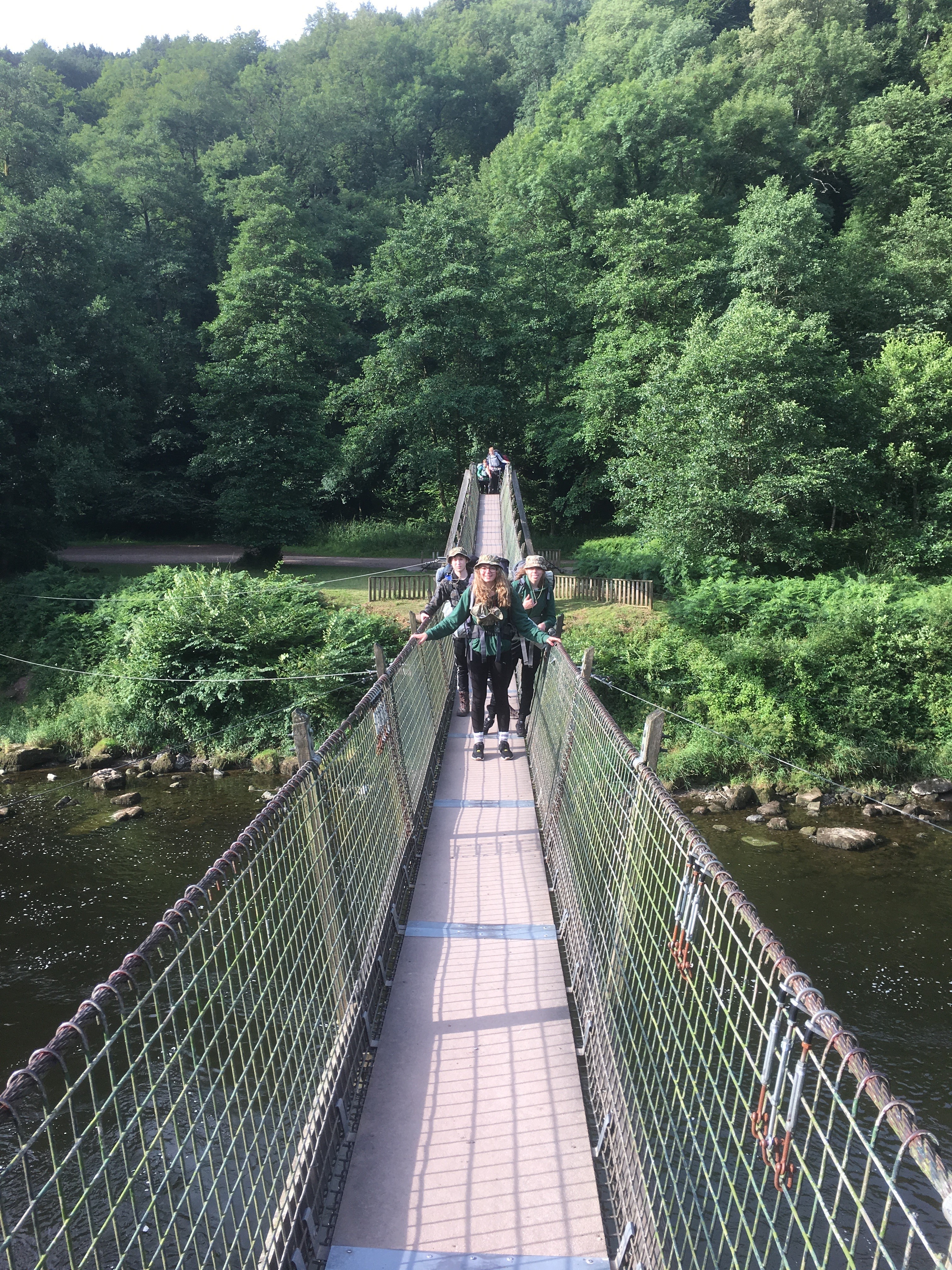
dofe

Useful websites and links

United Learning Hub

United Learning comprises: United Learning Ltd (Registered in England No: 00018582. Charity No. 313999) UCST (Registered in England No: 2780748. Charity No. 1016538) and ULT (Registered in England No. 4439859. An Exempt Charity). Companies limited by guarantee.
Registered address: United Learning, Worldwide House, Thorpe Wood, Peterborough, PE3 6SB.

Financial Accountability and Freedom of Information

United Learning